1 Thought:
Familiar with the Onitsuka Tiger? How about Nike?
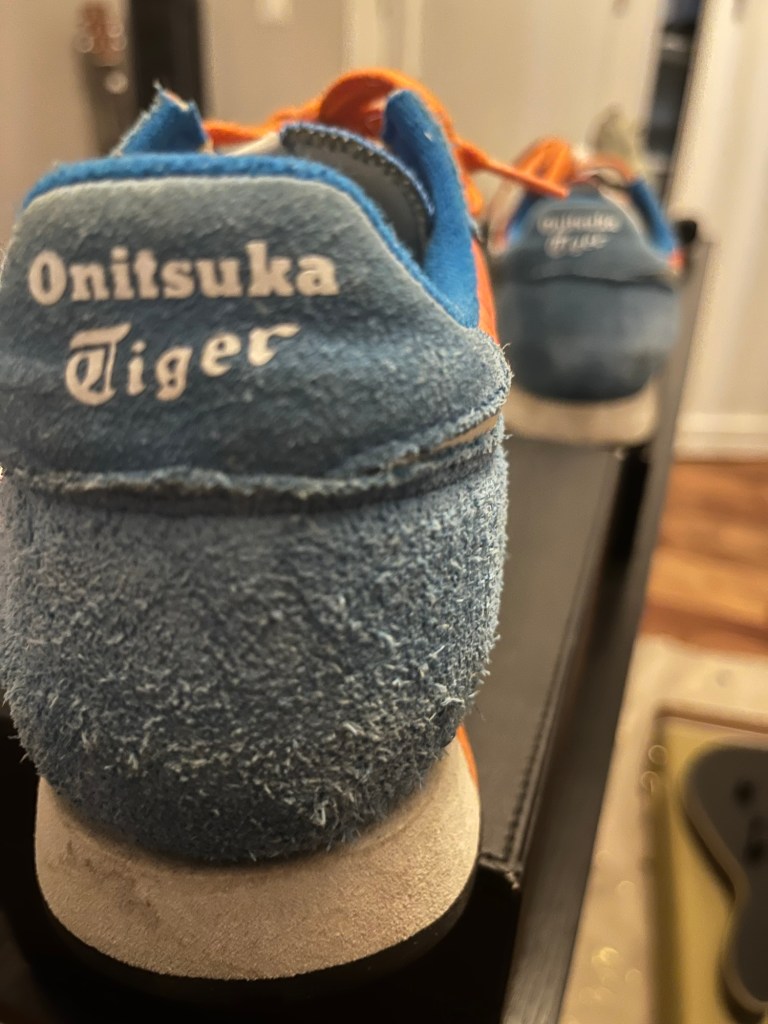
Nike might never have been without the Tiger (my actual pair pictured). Highly recommend you read Shoe Dog, a well written book that breaks out how Nike came to be the leader in not only running shoes, but also so many other sports by just doing it.
Act Before You’re Ready: The Power of Imperfect Action
There is a quiet trap that stops more people from succeeding than lack of talent, resources, or intelligence. It’s the belief that things must be perfect before you begin.
The truth is that success almost never begins with perfection. It begins with movement.
The most transformative companies, careers, and ideas often start with messy, uncertain action taken long before the path is clear. One of the most powerful examples of this mindset can be found in the story of Phil Knight, the founder of Nike.
Long before Nike became a global giant, Knight faced a moment where waiting for perfection would have ended his journey entirely.
Instead, he chose action.
The Myth of the Perfect Starting Point
Many people delay progress because they believe they need the right conditions before they start:
- The perfect business plan
- The perfect product
- The perfect timing
- The perfect skills
- The perfect confidence
But perfection is rarely the starting line. More often, it’s the result of iteration.
Every successful entrepreneur, athlete, and creator eventually realizes a simple truth:
Momentum beats perfection.
You don’t learn by thinking about doing something. You learn by doing it, failing at parts of it, adjusting, and doing it again.
Few stories illustrate this better than Phil Knight’s journey from a small shoe importer to the founder of one of the most recognizable brands in the world.
The Beginning: Blue Ribbon Sports
In the early 1960s, Phil Knight was not running Nike.
He was running a small distribution company called Blue Ribbon Sports.
Blue Ribbon Sports began as a simple idea Knight developed while studying business. He believed that high-quality running shoes made in Japan could compete with expensive German brands dominating the American market.
Instead of building a shoe company immediately, Knight started by importing shoes from a Japanese manufacturer called Onitsuka Tiger (commonly known simply as Tiger shoes).
Knight and his former track coach, Bill Bowerman, sold the shoes out of the trunk of Knight’s car at track meets.
There was no polished strategy.
No global brand vision.
No perfect roadmap.
Just a simple step forward.
Knight believed in the product, believed runners needed something better, and started moving.
The Unexpected Crisis
For several years, Blue Ribbon Sports grew by selling Tiger shoes across the United States.
But there was a hidden problem.
Blue Ribbon Sports did not control the product. They were only a distributor.
As sales increased, the relationship with Tiger began to deteriorate. The Japanese company started exploring ways to bypass Blue Ribbon entirely and distribute directly in the United States.
Eventually, Tiger began pulling away from Knight’s company.
For most entrepreneurs, this moment would have been the end.
Their entire business depended on someone else’s product.
If Knight had waited for certainty or perfection, he likely would have tried to repair the partnership indefinitely.
Instead, he made a decision that would change everything.
The Leap Into the Unknown
Rather than relying on Tiger, Phil Knight and Bill Bowerman decided to create their own shoe company.
They had no large factory.
No global brand.
No guarantee it would work.
But they had experience, belief, and momentum.
That decision led to the birth of Nike.
What makes the story remarkable is not just the outcome — it’s how imperfect the start was.
The Nike name itself was suggested by one of the early employees, Jeff Johnson.
The famous swoosh logo was created by a design student named Carolyn Davidson for only $35.
The first shoes were experimental and often improved on the fly by Bowerman, who famously used his wife’s waffle iron to create the prototype of Nike’s famous waffle sole.
Nothing about the early days was perfect.
But they kept moving.
The Birth of “Just Do It”
Years later, Nike would become known worldwide for its slogan:
“Just Do It.”
The phrase became one of the most iconic taglines in advertising history and was introduced by the agency Wieden+Kennedy in 1988.
But the philosophy behind it existed long before the slogan itself.
Phil Knight built Nike on the same principle:
Action over hesitation.
Had he waited for ideal conditions, Nike may never have existed.
Instead, he acted while things were still messy, uncertain, and incomplete.
Imperfect Action Builds Advantage
There is a powerful reason action beats perfection: speed compounds.
When you act early:
You gain experience faster.
You gather feedback sooner.
You learn what actually works.
Meanwhile, those waiting for perfect conditions remain stuck in planning mode.
Every successful venture goes through rough drafts:
- First versions of products
- First versions of strategies
- First versions of content or businesses
The people who win are usually not the ones with the best starting idea.
They are the ones who iterate the fastest.
Nike didn’t become Nike overnight.
It became Nike because it kept improving.
The Hidden Cost of Waiting
Waiting feels safe.
But it has a cost that is often invisible.
When people delay action, they lose:
- Time
- Learning opportunities
- Market timing
- Momentum
Worse, hesitation builds doubt.
The longer an idea stays in your head without action, the more reasons you find not to pursue it.
Phil Knight could have spent years trying to perfect a shoe company before launching one.
Instead, he began with a simple distribution model and adapted when reality forced change.
The crisis with Tiger shoes didn’t destroy Blue Ribbon Sports.
It forced the creation of Nike.
The Momentum Principle
One of the most powerful forces in progress is momentum.
Action creates feedback.
Feedback creates improvement.
Improvement creates confidence.
Confidence fuels further action.
This cycle is what separates dreamers from builders.
Phil Knight didn’t know exactly how Nike would unfold.
But by staying in motion, he created opportunities that planning alone could never produce.
Applying the “Just Do It” Mindset
The lesson from Phil Knight’s story isn’t just about shoes or sports.
It applies to almost every meaningful pursuit.
Starting a business.
Launching a blog.
Building a personal brand.
Learning a skill.
Improving your health.
In all of these areas, the biggest barrier is often starting imperfectly.
The first attempt will not be great.
The first product will need improvement.
The first strategy will evolve.
But progress only begins after movement.
Small Steps Create Big Outcomes
The early days of Nike looked nothing like the company it would become.
Phil Knight was selling shoes from the trunk of a car.
Bowerman was experimenting with rubber in a waffle iron.
A student designer created the logo.
An employee suggested the name.
Individually, none of those moments looked historic.
But together they formed the beginning of something extraordinary.
And none of them required perfection to begin.
They required action.
The Real Competitive Edge
In today’s world, information is everywhere.
Strategies, tutorials, and guides are easy to find.
The real advantage isn’t knowledge.
It’s execution speed.
People who act quickly gain experience faster than those who wait.
They discover opportunities earlier.
They adapt while others are still planning.
Phil Knight didn’t build Nike because he had a flawless plan.
He built it because he kept moving forward.
Start Before You’re Ready
There will never be a moment when everything is perfectly aligned.
There will always be something you don’t know.
Something you wish were better.
Something you think you should fix first.
But progress rarely rewards those who wait for certainty.
It rewards those who take the first step.
Phil Knight could have spent years trying to preserve the Tiger partnership.
Instead, he chose to create something new.
That imperfect decision became one of the most successful brands in history.
The Simple Rule
If there is one lesson to take from the story of Nike, it is this:
Start before you feel ready.
Refine along the way.
Improve through action.
Learn faster than you hesitate.
Because the biggest breakthroughs rarely begin with perfect conditions.
They begin the moment someone decides to just do it.
1 Quote:
“The cowards never started and the weak died along the way. That leaves us, ladies and gentlemen. Us.”
– Phil Knight
1 Question:
In the early days, Phil Knight wasn’t running a global brand. He was selling shoes from the trunk of his car, navigating uncertainty, and trying to keep a small company alive while his main supplier pulled away. When the partnership with Tiger began to collapse, he didn’t have a perfect plan waiting in the wings. What he had was momentum—and the willingness to act before everything was clear. That decision forced the creation of Nike, a company that would go on to reshape sports, culture, and business around the world. The lesson isn’t just about shoes or entrepreneurship. It’s about movement. The people who change their lives and build meaningful things rarely start with perfect conditions. They start the moment they decide to move forward anyway. Plans can evolve. Skills can improve. But momentum only begins when you take the first step and refuse to wait for perfect timing.
I put my blogging on hold for awhile trying to improve the format, structure, and intent which in turn put things to a screeching halt. I should have just kept doing it and improved and adjusted as I went. What are you over analyzing rather than doing?
__________________________________________________________________________
P.S. If you like what you are getting from this blog, it would be appreciated if you shared it with other like-minded individuals. The more people that subscribe, the better the comments, and the better we all become from that feedback. I appreciate the support!
FYI… reminder when you subscribe that for your privacy protection you must go to the email you entered and click confirm.
 A Few-Things
Leave a comment